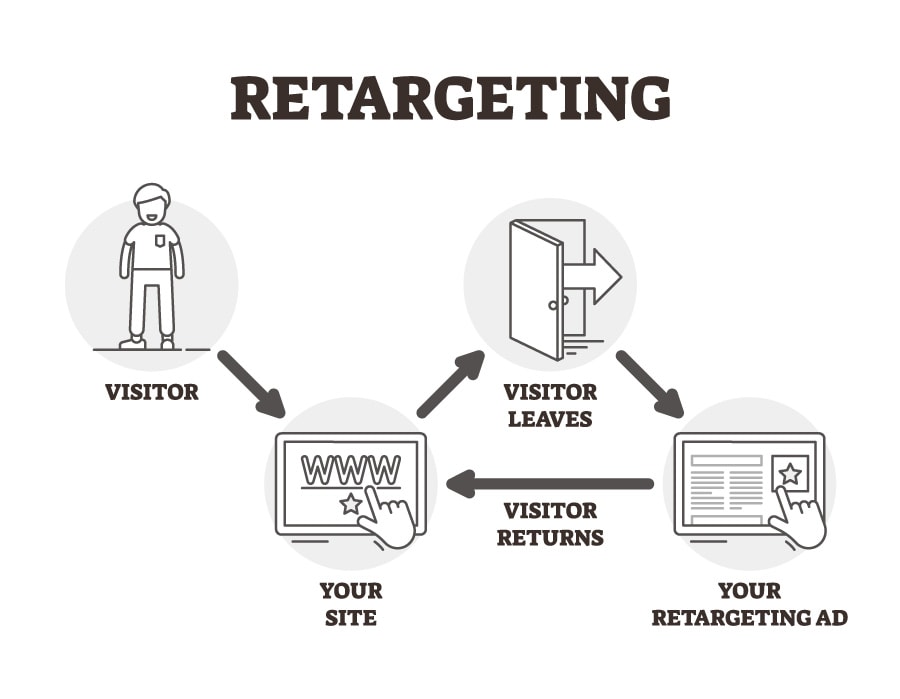
In 2026, retargeting is no longer about chasing users with the same ad again and again. Privacy-first platforms, AI-driven personalization, and multi-touch customer journeys have completely reshaped how high-converting retargeting funnels are built. Brands that still rely on outdated “one-size-fits-all” remarketing are seeing rising ad costs and falling conversion rates.
The winners in 2026 are businesses that design intent-based, AI-optimized retargeting funnels that feel helpful, timely, and personal—without being creepy. This article breaks down how modern retargeting funnels work and how to build one that actually converts.
Why Retargeting Still Matters in 2026
Even with smarter search results, zero-click experiences, and social discovery, most users don’t convert on their first visit. Attention is fragmented across platforms, devices, and formats. Retargeting acts as the connective tissue that brings users back into your ecosystem.
What has changed is how retargeting works:
- Cookies are limited or deprecated
- First-party data is king
- AI predicts intent instead of relying only on past clicks
- Messaging adapts dynamically to user behavior
Retargeting in 2026 is less about repetition and more about progression.
The Modern Retargeting Funnel Structure
A converting retargeting funnel in 2026 is built in layers, not loops. Each stage moves the user closer to a decision rather than pushing them to buy too early.
1. Awareness Retargeting (Warm Audiences)
This stage targets users who:
- Visited your site
- Watched part of a video
- Engaged with social posts
- Clicked but bounced quickly
Goal: Rebuild context and trust
Messaging: Educational, problem-aware, curiosity-driven
Formats: Short-form video, carousels, interactive ads
Instead of “Buy Now,” the focus is:
- “Here’s what you missed”
- “Here’s how others solved this problem”
- “Here’s why this matters to you”
2. Consideration Retargeting (Intent Signals)
Now the funnel tightens. This audience includes users who:
- Viewed product or service pages
- Spent time on key pages
- Downloaded resources
- Interacted multiple times
Goal: Position your solution clearly
Messaging: Value-focused, benefit-driven, comparison-aware
Formats: Testimonials, use-case videos, explainer ads
In 2026, AI helps auto-match messaging to user intent clusters, such as:
- Price-sensitive users
- Feature-focused users
- Trust-seeking users
Each group sees different creative—even within the same campaign.
3. Conversion Retargeting (Decision Stage)
This is where most funnels used to start. In 2026, it’s where they finish.
This audience includes:
- Cart abandoners
- Checkout drop-offs
- High-intent page visitors
- Repeat visitors within a short timeframe
Goal: Remove friction and hesitation
Messaging: Risk reduction and urgency
Formats: Dynamic ads, offer-based creatives, reminders
What works best now:
- Limited-time incentives
- Social proof with specificity
- Clear next steps (not pressure)
4. Post-Conversion Retargeting (Often Ignored, Highly Profitable)
Retargeting doesn’t stop at the sale.
Goal: Increase lifetime value
Messaging: Education, onboarding, upgrades
Formats: Helpful videos, feature highlights, community invites
In 2026, brands use retargeting to:
- Reduce refunds
- Increase repeat purchases
- Turn buyers into advocates
This stage quietly boosts ROI across the entire funnel.
AI-Powered Optimization in 2026 Funnels
AI is the engine behind high-performing retargeting funnels today.
Key AI Capabilities:
- Predictive intent scoring
- Creative rotation based on engagement probability
- Budget shifting toward high-conversion micro-audiences
- Automatic frequency control to prevent ad fatigue
Instead of manually testing dozens of ads, AI systems now:
- Identify winning patterns
- Kill underperforming creatives fast
- Scale what works in real time
The result is lower costs and higher relevance.
Creative Strategy That Converts in 2026
Retargeting creatives have evolved dramatically. Static banners are fading, replaced by story-driven, context-aware content.
High-Converting Creative Elements:
- Short videos under 30 seconds
- Clear single-message focus
- Subtle personalization (industry, use case, pain point)
- Native platform styling
Most importantly, the creative must match the funnel stage. Showing a discount to a first-time visitor or a beginner guide to a ready buyer kills conversions.
Frequency, Timing, and Platform Mix
One of the biggest mistakes in retargeting is overexposure.
In 2026:
- Smart frequency caps prevent fatigue
- Ads appear when users are most likely to act
- Platforms are mixed strategically
A strong funnel typically blends:
- Search retargeting for high intent
- Social retargeting for emotional reinforcement
- Video retargeting for storytelling
- Native placements for trust-building
The user experiences continuity, not repetition.
Privacy-First Retargeting That Still Works
With stricter data regulations, retargeting funnels rely heavily on:
- First-party data
- Consent-based tracking
- Platform-native signals
Successful brands focus on ethical personalization, making users feel understood—not watched. Transparency and relevance build trust, which directly impacts conversion rates.
Measuring Retargeting Funnel Success
In 2026, success isn’t judged by last-click conversions alone.
Key metrics include:
- Assisted conversion rate
- Funnel progression speed
- Cost per engaged user
- Lifetime value growth
- Drop-off recovery rate
When measured correctly, retargeting often proves to be the highest ROI channel in the entire marketing stack.
Final Thoughts
Retargeting funnels that convert in 2026 are smarter, more human, and more strategic than ever before. They respect user intent, leverage AI responsibly, and guide prospects step by step instead of forcing decisions.
If your retargeting still feels like chasing users around the internet, it’s time to upgrade. The future belongs to brands that retarget with purpose, precision, and patience—and the conversions follow naturally.